

Entertaining Mr Coppin
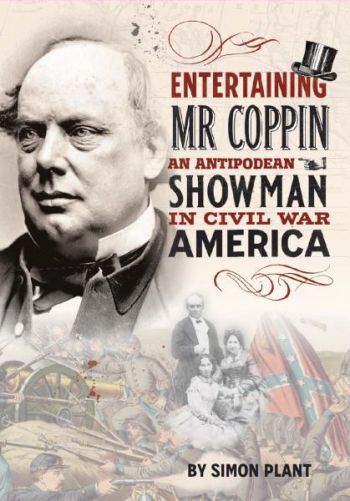
Theatre Heritage Australia has just published Entertaining Mr Coppin: An Antipodean Showman in Civil War America. The author, Simon Plant, explains the remarkable story of Australian entrepreneur’s adventure in the United States.
TIMING is everything, every actor knows that, and George Selth Coppin (1819-1906) knew it better than most.
Son of wandering English minstrels, and raised ‘on the road’, he was playing the fiddle for paying punters at the age of six. The comedy skills Master Coppin perfected in makeshift country theatres – the pratfalls, the tumbling, the double entendres – underpinned the low comedy parts he went on to give in the Australian colonies.
His most popular characters, Billy Barlow the street spruiker and village busybody Paul Pry, both fed off audiences for laughs. But Coppin’s good timing seemed to desert him when he and the eminent English tragedians Charles and Ellen Kean sailed for America from the Antipodes in July 1864.
The United States was, at that time, horribly dis-united. A bitterly contested Presidential election campaign was playing out against the backdrop of gruesome battles between the Union North and the Confederate South. And landing in California in October 1864, Coppin was warned that public demonstrations in favour of the candidates (Republican Abraham Lincoln and Democrat General George B. McClellan) were likely to ‘injure’ the early part of Mr and Mrs Kean’s season of Shakespeare. So it proved. In San Francisco, Coppin confessed ‘the confounded election [due the first week of November] injures our business very much’.
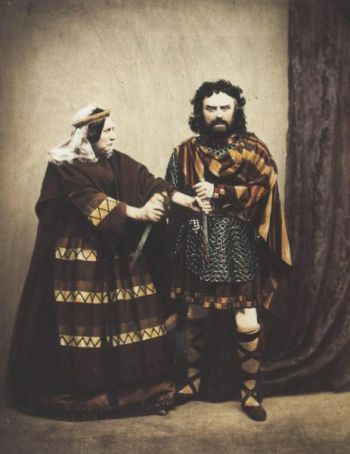
By March 1865, he was in New York and struggling to find a Broadway theatre willing to accommodate the Keans. Again, his timing was off. Every respectable playhouse on the great thoroughfare was doing a roaring trade with escapist fare and theatre managers were not inclined to put tragedy on stage. Edwin Booth’s Hamlet, nearing one hundred days at the Winter Garden, was the rare exception. Coppin saw Booth in the role and decided, ‘not good’.
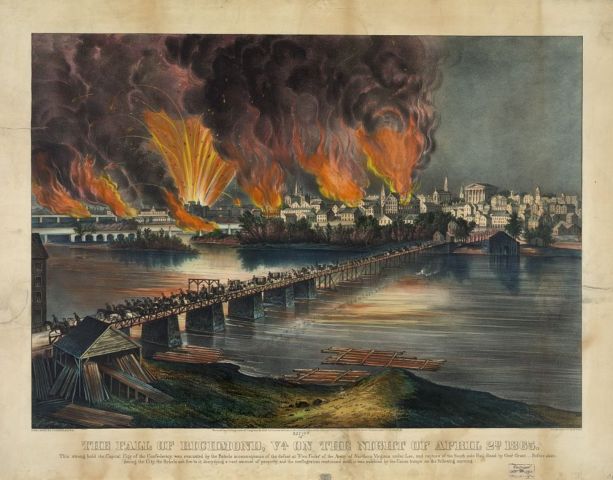
Eventually, a venue – the Broadway Theatre - was found for Mr and Mrs Kean but fast changing events on the war front complicated plans to have them open there on Easter Monday. An auction for tickets was overshadowed by the fall of Richmond (the Confederate capital) and a press dinner was upstaged by General Robert E. Lee’s surrender in Virginia.
Coppin went to bed early on Good Friday, confident that his distinguished English stars would finally shine in Gotham. How could he know that, down in Washington DC, President Lincoln was taking in a play at Ford’s Theatre?
Entertaining Mr Coppin: An Antipodean Showman in Civil War documents this trouble-prone tour. Drawing on journals, playbills and rarely seen photographs, held in collections both here and overseas, my new book reconstructs a hair-raising journey across North America that took nearly two years to complete. Coppin, the Keans and their small touring party endured terrible journeys by sea. Health scares dogged them at every turn. And gun violence was a constant threat.
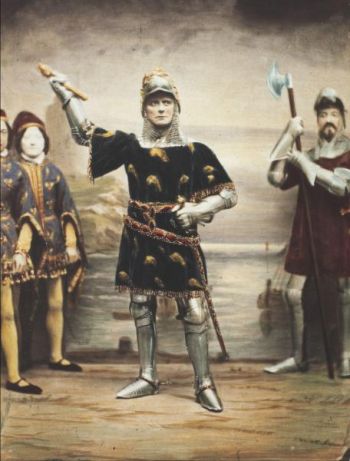
‘No theatrical ship sails well in troubled waters,’ Mr Kean liked to say. But having prospered in the colonies, against considerable opposition, this vainglorious actor had it in his head that America would welcome he and his wife back after an absence of 20 years. Even in wartime. ‘I am assured I am likely to make a large amount of money,’ he wrote home.
Coppin liked the sound of that. Mr and Mrs Kean’s Antipodean tour – from late 1863 to mid 1864 - had helped him clear debts but he was eager to build a nest egg for his growing family. The fastest way to do that was to conduct the Keans on a tour of the United States, starting in the Far West and concluding Out East. ‘I shall visit America unprejudiced and impartial,’ he told friends ahead of his departure for San Francisco, ‘and if I can discover any reforms to benefit Victoria, I shall not hesitate in saying so upon my return.’
 Coppin returned to Melbourne in January 1866. True to his word, he had plenty to say about the United States. It was, he declared, ‘the most wonderful country upon the face of the earth’, a country endowed with vast resources and infinite energy. In the same breath, he warned colonists against following America in cranking up taxes and erecting tariff walls. ‘The country is still in a very dissatisfied condition,’ he told them. A farce based on his travels, titled Coppin in California, was poorly received but useful contacts forged in the States paid dividends later on.
Andrew Birrell, a theatrical agent in San Francisco, corresponded with ‘Friend Coppin’ in the late 1860s and urged the colonist to engage the services of American actors James Cassius (J.C.) Williamson and his wife Maggie Moore. Coppin did so, having glimpsed J.C.’s comic talents in a New York show in 1865. On this occasion, his timing was perfect. The Williamsons’ comedy melodrama, Struck Oil opened in Melbourne in 1874 and was a smash hit.
The rest, as they say, is history.
SIMON PLANT is a Melbourne writer-researcher with a special interest in Australian performing arts history.
Entertaining Mr Coppin: An Antipodean Showman in Civil War America, by Simon Plant, is published by Theatre Heritage Australia. Available from Book Nook Performing Arts Bookshop.
Images:
'The Fall of Richmond, VA, on the Night of April 2d, 1865', published by Currier & Ives, New York - Museum of Modern Art, New York.
The cover of Entertaining Mr Coppin.
Charles and Ellen Kean in Macbeth, 1858, photo by Martin Laroche, London - Victoria & Albert Museum, London.
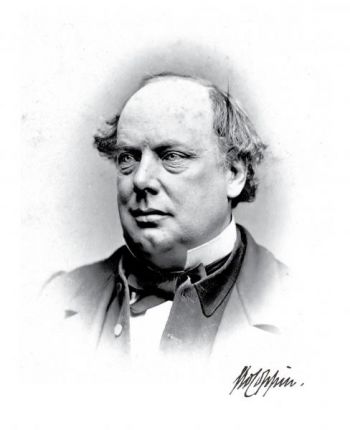
George Coppin, 1865, photo by C.D. Fredricks & Co., New York - State Library Victoria, Melbourne.
Charles Kean in Richard II, 1857, photo by Martin Laroche, London - Victoria & Albert Museum, London.