

Antigone
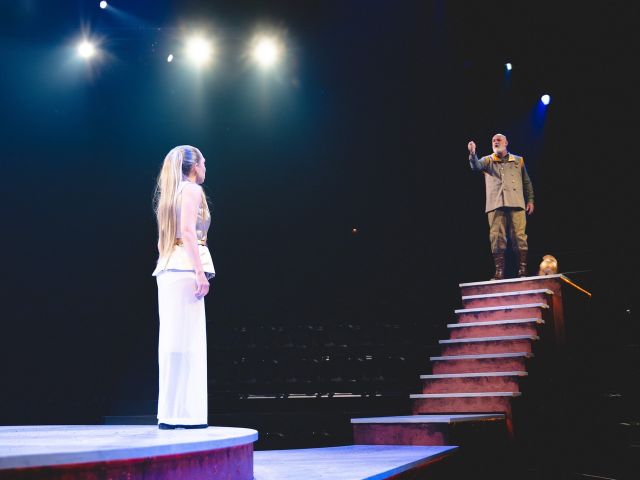
Sophocles’ Antigone has survived millennia because its central question refuses to age, and La Boite Theatre’s latest production leans into that unsettling relevance with conviction and flair. Co-directed by Courtney Stewart and Nigel Poulton, this tight staging distils the tragedy into a focused and theatrically muscular encounter that balances epic scale with the renowned intimacy of the Roundhouse.
As a three-hander, the production places considerable responsibility on its performers, who meet the challenge with admirable focus, trust, and discipline. Maddison Burridge’s Antigone is fierce and resolute, a young woman driven by conviction rather than spectacle. Burridge brings admirable vocal and physical control to the role, allowing the character’s defiance to feel grounded and purposeful. Particularly striking is her work in her lower vocal register, which lends the performance a compelling sense of strength and gravity. Burridge’s expressiveness and emotional clarity ensure that Antigone’s moral certainty never feels abstract. It is embodied, immediate, and thankfully avoids wallowing in histrionics.
Billy Fogarty proves a wonderfully flexible performer, demonstrating a strong command of rhythm and characterisation. Their pacing of dialogue is finely tuned, creating a lively elasticity within the scenes. Fogarty’s physical presence is especially effective, with carefully observed gestures and posture shaping the storytelling as much as the text itself. A particularly expressive face allows subtle reactions to land clearly across the space, adding texture and humour where appropriate while maintaining the seriousness of the dramatic stakes.
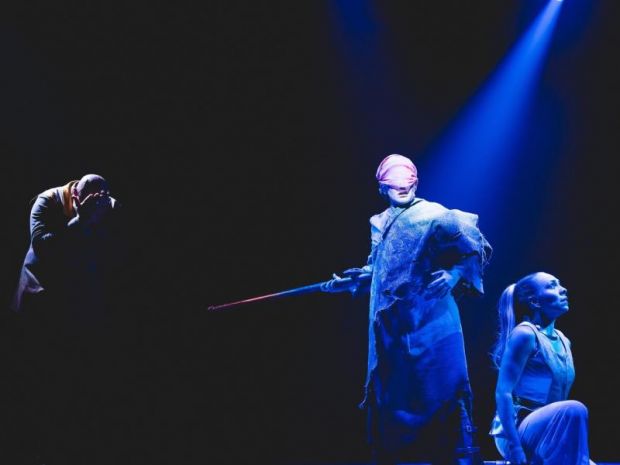
As Creon, Hayden Spencer delivers a performance of impressive control and nuance. Spencer captures both the charm and authority of a leader accustomed to being obeyed, while gradually revealing the ferocious and uncompromising instincts that drive the character’s downfall. His vocal work is a particular highlight. Warm, resonant tones project powerfully through the theatre, while moments of heightened emotional intensity sharpen the character’s increasingly dictatorial resolve. Spencer’s portrayal wisely avoids caricature, instead presenting Creon as a man whose certainty and pride becomes his tragedy.
Stewart and Poulton’s direction embraces the mythic qualities of the text without losing sight of its human stakes. The staging frequently adopts a sense of ritual, with slow-motion sequences and carefully crafted mimed moments that introduce a feeling of ceremony and spirituality to the storytelling. These images create a striking theatrical language that complements the text rather than competing with it. One especially evocative device involves dirt falling from above, a simple but powerful visual motif that resonates throughout the production. The use of voiceover adds another layer of atmosphere, the recordings delivered with a clarity and beauty that heighten the sense of poetic reflection within the drama.
The dramaturgical approach by Stewart and Brady Watkins reveals a thoughtful engagement with the play’s enduring questions. References to contemporary feminist discourse sit comfortably alongside the ancient framework of the tragedy, emphasising Antigone’s refusal to remain silent within a system designed to suppress dissent. The similarities to modern struggles are impossible to ignore.
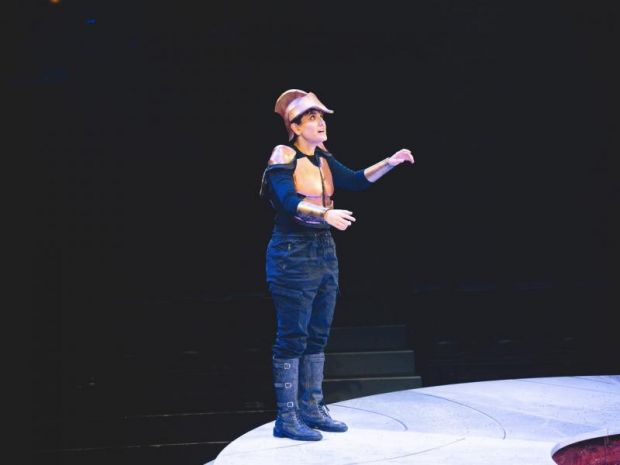
Importantly, the creative team strikes an impressive balance between creating something dramatic and impactful, while resisting the temptation to inflate every moment into emotional excess. Instead, the narrative unfolds with powerful shape and restraint, allowing the ethical complexity of the story to emerge with clarity and nuance.
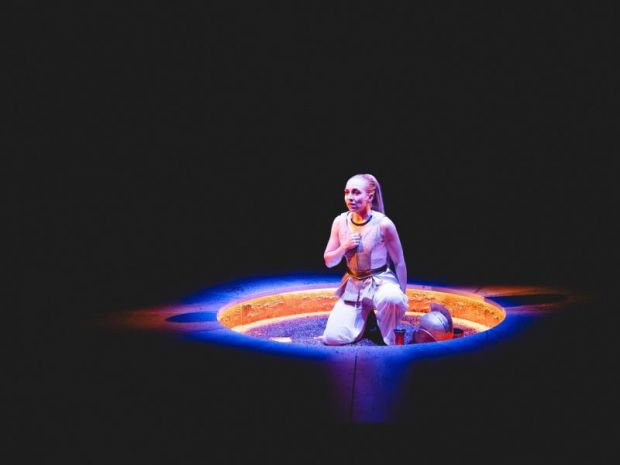
Josh McIntosh’s set and costume design provides an imaginative and visually striking environment that makes excellent use of the Roundhouse’s in-the-round staging. A towering staircase extends upward, visually reinforcing the shifting hierarchies of power that define the narrative. Beneath it lies a circular playing space with a reflective centre that cleverly acknowledges the architecture of the theatre. Early in the production the reflective surface suggests a pool of water, calm and luminous beneath the action. By the final moments it has been obscured by falling dirt, a quiet but effective transformation that reinforces the play’s meditation on mortality and consequence.
Lighting designer Teegan Kranenburg completes the production’s visual world with a series of beautifully timed lighting transitions. The design creates a moody and dynamic atmosphere that heightens each emotional shift within the narrative. Light becomes an expressive tool, guiding the audience’s attention while reinforcing the changing emotional temperature of the play.
Brady Watkins’ work as composer and sound designer supports the production’s epic sensibility with great care. The score provides tonal shifts that underline emotional beats while never overwhelming the performers. Carefully placed dramatic stings and atmospheric textures help shape the rhythm of the piece, timed perfectly with lighting changes, and reinforcing the sense that the story is unfolding on a moral and political battleground.
Behind the scenes, the smooth execution of this technically demanding production speaks to the careful work of stage manager Petria Leong and assistant stage manager Kelsey Booth. Their coordination ensures that every element, from falling dirt to precisely timed cues, unfolds seamlessly in performance. It is a reminder that the quiet discipline of stage management underpins the success of any production.
This Antigone succeeds because it treats the ancient text not as an artefact but as a living argument. Stewart and Poulton’s production invites the audience to wrestle with questions of authority, loyalty, and conscience that remain deeply relevant today. In doing so, it demonstrates once again why this Greek tragedy continues to hold the stage with such enduring power.
Kitty Goodall
Photography by Dean Hanson Photography
Subscribe to our E-Newsletter, buy our latest print edition or find a Performing Arts book at Book Nook.