

Arsenic and Old Lace
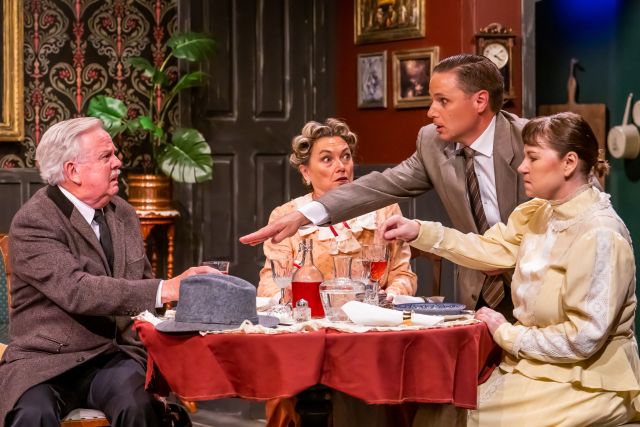
Arsenic and Old Lace is a dark comedy centred on the Brewster family. Mortimer, a drama critic for a newspaper, discovers a family secret which his sweet spinster aunts have been burying. Everyone knows the sinister aunts as sweet and charitable women doing good deeds. However, Mortimer discovers a body in the window seat and learns that the aunts have 12 bodies in the cellar of lonely men who they assisted to a “better place” with their special concoction of elderberry wine. What follows is a hysterical unravelling of all the family secrets as the fast-paced comedy explores the themes of morality, family, loyalty, and the fine line between madness and sanity. The play is set in 1940’s Brooklyn, New York bringing this hilarious comedy to life with witty dialogue, eccentric characters, and clever plot twists.
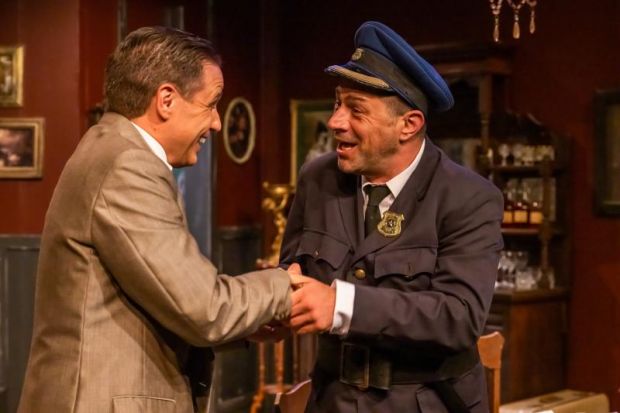
The story of Arsenic and Old Lace has been portrayed on stages since 1941 and even a 1944 film. The Castle Hill Players had previously performed this play in 1966 so it was going to be interesting if they could mount a fresh take on an old favourite. Castle Hill Players welcomed us into the Pavilion Theatre like old friends. With an intimate setting and many of their committee available to assist and chat with patrons it felt like we were part of their theatre family. I went into this show with a general awareness of the plot and immediately noticed that the audience was a kaleidoscope of the community with a range of ages eagerly anticipating the night. From the opening scene it was clear that we were in for an enjoyable evening.
Director Steve Rowe weaved together the characters with skill and a vision which honoured the history of this play, whilst allowing the audiences to experience a fresh and enjoyable performance. Rowe crafted a stage which was rich with comedic timing and allowing characters to sit in the moment briefly, allowing audiences to enjoy the endless jokes and innuendos. The impeccable casting suited each role, and each character had a distinct aspect or trait that together created a perfectly imbalanced and highly entertaining family.
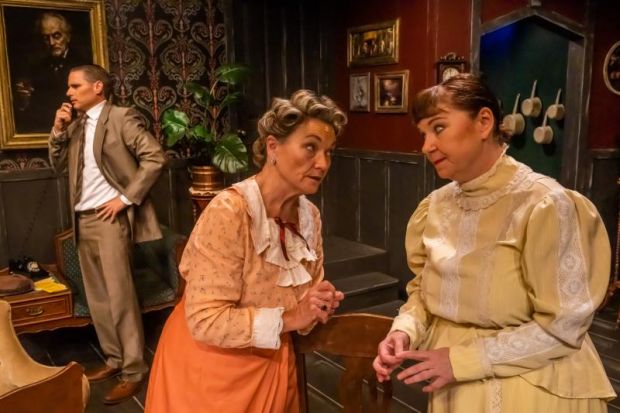
From the moment Kate Mannix entered the stage as Aunt Abby Brewster, she commanded attention and stole the spotlight with her confident delivery and strong stage presence. Her sharp timing, expressive facial expressions, and commitment to the role brought depth and humour to the character making every scene she was in memorable. She was supported by Margaret Olive, as her partner-in-crime Aunt Martha Brewster. Olive brought a delightful oblivious and misguided honesty to her character which made audiences love her and her dedication to their numerous acts of charity. Her line “Oh piffle!” serenely delivered immediately brought back memories of childhood aunts.
Brett Watkins brought the earnest and well-meaning Mortimer Brewster to life with energy and impeccable comedic timing. Watkins often allowed his face to say a thousand words and heighten the humour of each moment. Mortimer’s sharp dialogue, moral convictions and mounting panic drive the comedy, and he becomes the emotional centre of the play. The interactions between Watkins and Emma Lebreuf as his love interest Elaine Harper are delightful. Lebreuf brings a sweetness to the play which is in stark contrast to the frantic energy of Mortimer and the sinister undertakings of other characters. The scene where Mortimer is asking Elaine to leave is a masterclass in the comedy being heightened through the strong physicality and the performers’ ability to give and take with one another, creating a lively rhythm allowing each performer to shine.
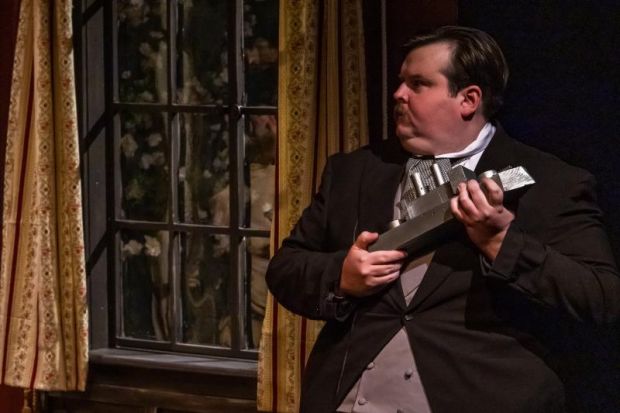
The second act has a much darker feel to it with the arrival of Jonathan Brewster, played by Thomas Southwell, and Dr Einstein, played by Jem Rowe. These two performers dramatically shifted the tone, raising the stakes and intensifying the comedy as their sinister presence contrasted sharply with the play’s already eccentric household. Their performances were highly contrasting yet perfectly complementary. Southwell commanded the stage with a menacing physical presence, deliberate walk, and shadowed face that amplified his sinister madness. While Rowe was outstanding as the bumbling, drunken and understated sidekick providing a humorous counterpoint that highlighted the absurdity of their schemes.
The standout was the character Teddy Brewster, Mortimer’s charmingly deluded, patriotic, and absent-minded brother who believes he is Theodore Roosevelt, complete with gesture and imaginary adventures. Myles Burgin did an outstanding job bringing Teddy to life, using precise timing, dry humour, and a steadfast belief in his own reality to make the character both hilarious and endearingly loveable. His constant calls of “Charge!” and unwavering dedication to building the Panama Canal provided some of the most memorable and laugh-out loud moments of the performance, perfectly showcasing Burgin’s timing and commitment to Teddy’s delightfully absurd reality.
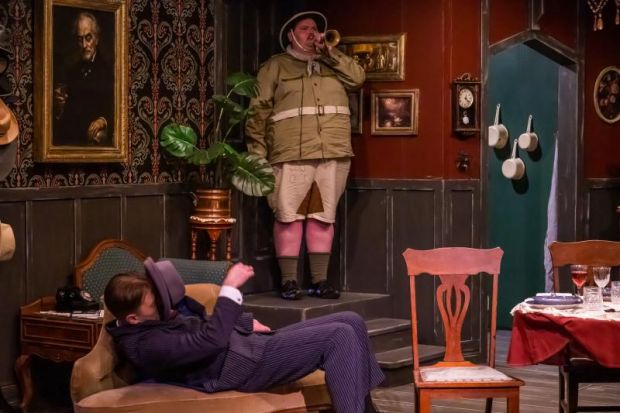
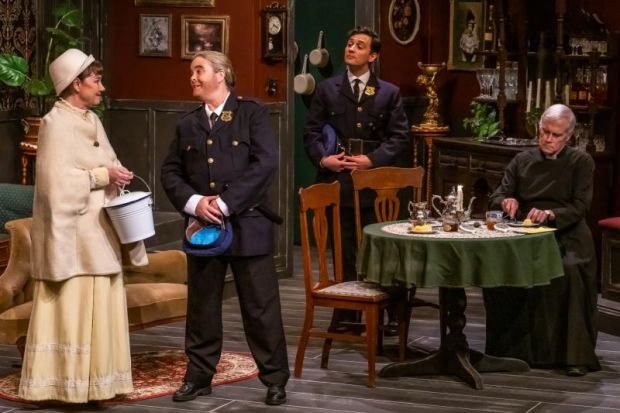
Rounding out the characters were several police officers, the Reverand, the doctor and the corpses. These characters were brought to life by a stellar ensemble who all played multiple roles with conviction. Often the unsung heroes of the production, the ensemble played a vital role in bringing the world of the play to life. They padded out scenes with energy and detail, provided essential support to the main characters, and added depth and texture that enriched the overall comedy and rhythm of the performance.
None of this would have been successful though without the amazing set which provided the Brewster’s home. The set was a simple one-room which was maintained the whole play as the Brewster’s living room. Constant references being made to the attic, the cellar, the kitchen and the neighbouring cemetery allowed audiences to picture the wider house and it’s surrounds. Steve Rowe was deliberate in how he had his actors engage with those alternative settings and it brought a richness to the simple living room setting. This was enhanced by the intricate details weaved throughout the room, from the lace cloths to the pendulum on the clock and the integral window seat which was often the focus of the scene. The hatstand, covered with its abundance of male hats, in a female-owned house, was a constant and whimsical reference to the sinister works of the aunts. Though never referenced or referred to, Mortimer’s interaction with it and the way he looked at it each time he discussed the bodies which were in the cellar was comedic gold.
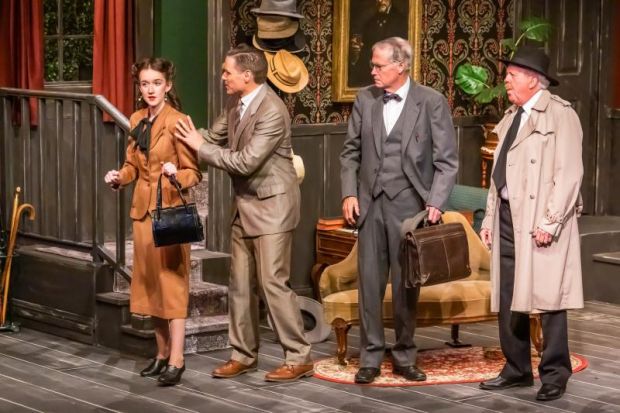
Each scene was enhanced by subtle lighting changes which was used to effect in specific moments throughout the show designed by James Winters. The exterior of the house, lit and seen through the window, showed the passage of time. Whilst the lighting on stage created shadows and assisted with the absurdity of different scenes. One of the best lighting states was the darkened house when Johnny Brewster and Dr Einstein arrive, with the aunts being visible in a glow from the stairs. The lighting was used to highlight how the mood and other characters was impacted by the arrival of these characters. Enhancing the production was the clever use of music, reminiscent of 1940s theatre, to underscore suspenseful moments or highlight a character’s recurring traits, adding an extra layer of atmosphere and humour to the show.
Whilst there were some minor opening weekend fumbles they can be easily overlooked due to the overall solid production standard. With such an intimate theatre space, every seat has a perfect view of the stage, and George Cartledge has done a solid job of ensuring sound is perfect throughout the show.
Mortimer’s words echo long after the curtain falls: “Insanity runs in my family, it practically gallops.” Leaving the theatre, I found myself laughing at traits in each character that are universal - quirks I recognise in family, friends, and even myself. Coupled with the genuine affection the characters show one another, and the way their relationships ebb and flow throughout the play, the production resonates with audiences of all ages. A thoroughly entertaining and polished opening to the 2026 season for The Castle Hill Players.
Sarah Webster
Subscribe to our E-Newsletter, buy our latest print edition or find a Performing Arts book at Book Nook.