

Calendar Girls

Calendar Girls is an inspiring story of ordinary women doing extraordinary things. Networks of women, through friendship, adversity and hard work have and will always continue to transform the world around them.
This is evident in the camaraderie on stage and the commitment of the Huon Valley Company to use part of the proceeds of the production for a cause akin to that of the characters in the show. This determination and generosity of spirit is what makes Calendar Girls endure.
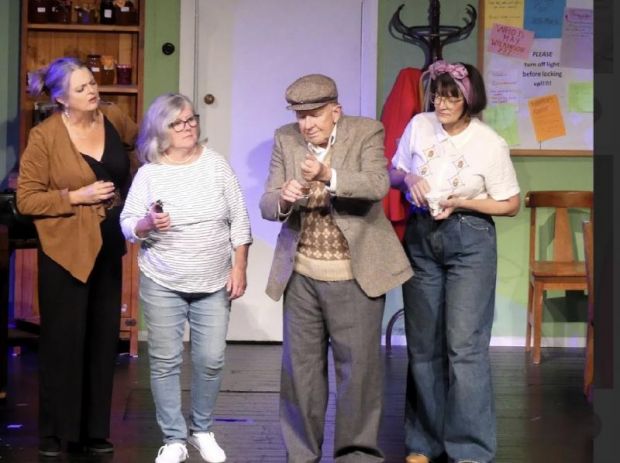
If pacing on the second night was a bit wobbly after opening night success, the notorious photo shoot exceeded expectations. This was tightly choreographed. Large light diffusers manipulated by the cast facilitated modesty, created tension and surprise. Props by Rebecca Forbes were excellent. The Marmalade jam pose (Flavia Caraballo as Ruth) was delicious.
The play flags a little in Act 2, but this is more a function of the episodic plotting than the acting. It is satisfying to see resolution to Ruth’s situation, but some other scenes failed to advance plot or character significantly e.g. the badminton scene. Ruth and Marie’s characters have already been established by this time. Geri Flynn does a great job as Chris, a core and driving force, but seems too sweet to be entirely convincing as the rebel in Act 1 or to get things so badly wrong in Act 2. Selina Vickery as Annie is an excellent foil to Flynn’s Chris. Emily Kuplis (Cora) is a relaxed onstage presence. Kylie Maudsley is well cast as Celia. Rod Gray establishes a sympathetic rapport with Selina Vickery. Norm Windsor brightened the stage with every entry. Sandi Velini (Lady Cravenshire) and Rebecca Forbes (Brenda) are two notables among the small cameo performances. There is beauty on this stage of women in all stages of life.
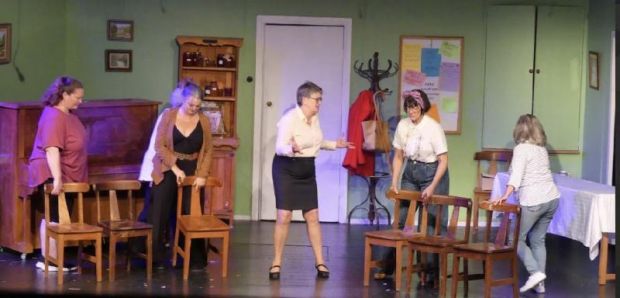
The box set depicting the Women’s’ Institute was ideal. The final scene with sunflowers was delightful but the flats depicting a photo realistic view of Yorkshire felt cumbersome and struck a jarring tone. The Huonville Hall has many technical limitations so it is difficult to suggest how this might have been done differently however, the auditory suggestion of outdoors which was employed but focussed with targeted lighting may all that was needed and have felt less removed from the world of the play. What did work well was the moment when letters fell from the ceiling.
Transitional music and many costume changes, work well to establish the passing of time and the changing of the seasons.
The ensemble clearly enjoyed working together. This female dominated cast and director, clearly evincing that there is no such thing as an ordinary woman.
Anne Blythe-Cooper
Photos by Mike Raine
Subscribe to our E-Newsletter, buy our latest print edition or find a Performing Arts book at Book Nook.