

A Curious Thing - The Story of Mary Anning
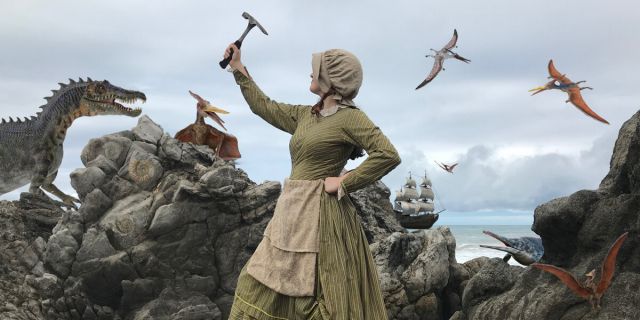
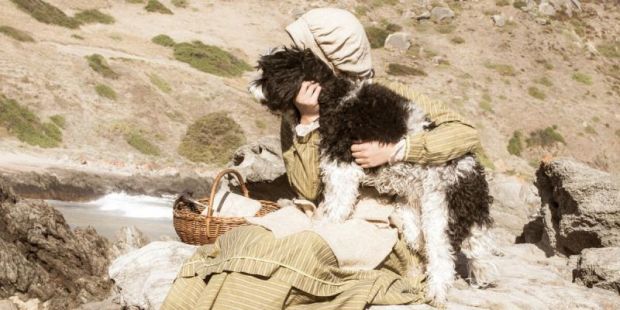
The old theatre saying is, ‘Don’t act with children or dogs,’ and both are key elements in this story. Not simply a one-hander, Director/Writer Michael Mills powerfully uses the voices of Mary Anning, from three stages of her life, and rather than a predictable chronology, they appear together, performing both separately, and as one. Adele Binns as Mary aged 11 is a vocal and character powerhouse. She is one to watch. Equally, Mia Ferraretto, as 24-year-old Mary, moves confidently, and sings and acts with passion. Linking and completing the trio, Michele Kelsey as 46-year-old ‘Lightning Mary’, breathes both warmth and fury into the story of this woman scorned, and her attention to actively re-living events as her younger selves tells the story is both skilled, and compelling. For me, the trio’s vocal harmony was a highlight and whilst there is some ‘sameness’ and repetition with lyrics and musical style, it holds as apt for the era. On opening night, there were opportunities to improve the balance between the backing music and cast vocals. Having said that, the cast, particularly Binns, ultimately triumphed. The dog? The story of Mary’s partnership with her faithful, beloved dog Tray, is tear-worthy and is joyfully sung about by all three.
The passion for telling the story of fossilist and fossil dealer pioneering 19th-century collector Mary Anning is both an entertainment and a passionate plea to acknowledge the women scientists of the past and inspire future generations of women who are long under-represented in all fields of the sciences.
Mary Anning was born in England in 1799 at a time when there was no such thing as women scientists. Furthermore, her father was roundly criticised for inspiring, including and training both his son and daughter to comb the cliffs and beaches of Lyme Regis in search of what Anning came to refer to as a ‘stone’s memory’. By the age of 13, she had made, labelled and catalogued her first, unacknowledged significant find and despite being of the poorer class, over time, because of her unique knowledge and ability, her friends, supporters and confidants were people of the upper classes. Unfortunately, despite her impressive finds, as a woman, she was eschewed by and was never a member of the Geological Society of London. Moreover, she was consistently taken advantage of by less skilled male scientists of the time who regularly claimed her work as theirs.

There cannot be a more appropriate venue for this tale than Ayers House. The ornate, gilded mid 19 century décor, featuring hand-painted ceilings and stencilled woodwork, frames the story beautifully. Equally Jackie Goldsmiths attention to detail with costumes (despite modern Don Martins), is beautiful, accurate and detailed.
Told through an original researched and written narrative with 14 songs, Mills, informed by English and local science authorities, has made his inspiration the telling the story of one of the unheralded heroines of science. It is a unique Fringe offering and is both enjoyable theatre and an important story to tell.
Jude Hines
Subscribe to our E-Newsletter, buy our latest print edition or find a Performing Arts book at Book Nook.