

The Diary of Anne Frank
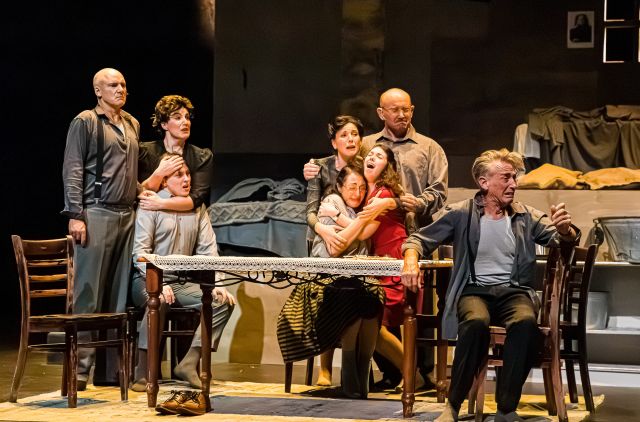
Bursting onto Broadway in 1955, The Diary of Anne Frank, adapted by Frances Goodrich and Albert Hackett, swept onto the stage like a beacon of light in the shadow of history. In a world darkened by the persecution of Jews in wartime Amsterdam, the play’s deeply human story of fragile hope and fierce dignity captured the hearts of audiences with electrifying emotional honesty. Its remarkable 717-performance run on Broadway cemented The Diary of Anne Frank as a theatrical classic, earning the Pulitzer Prize for Drama and multiple Tony Awards, including Best Play. This extraordinary success secured its legacy as a timeless and powerful work that continues to resonate with audiences around the world. Additionally, a Broadway revival of the play opened at the Music Box Theatre in December 1997, starring a young Natalie Portman as Anne.
Multi-award-winning director Drew Anthony (Saturday Night Fever, Footloose, Hot Shoe Shuffle) has built an acclaimed career as a performer, producer, director and choreographer throughout Australia. His production of The Diary of Anne Frank, originally staged at the State Theatre Centre of WA, has achieved significant recognition. The show was honoured at the BroadwayWorld Awards Perth 2025, winning Best Play, with further accolades including Best Direction of a Play (Drew Anthony), Best Performer in a Play (Chloe‑Jean Vincent), and Best Supporting Performer in a Play (Holly Easterbrook).
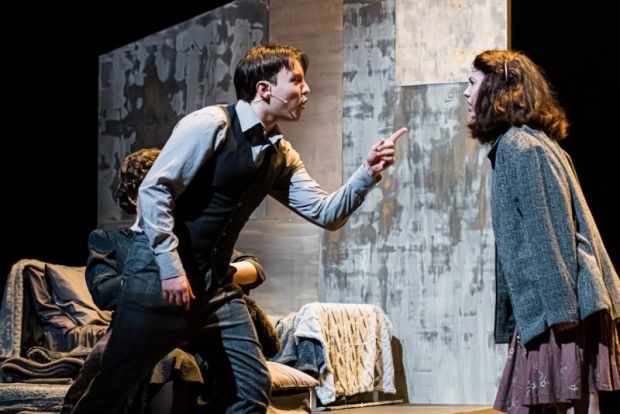
This exceptional company of ten performers craft a production of striking authenticity and emotional power. With great sensitivity and respect for the real-life figures whose stories unfold on stage, the ensemble delivers a performance that is both deeply moving and profoundly human. Through the intimate, enduring pages of her diary, Anne Frank’s resilient voice brings history back to life on stage. Born from a nearly lost notebook, the story unfolds with tender poignancy — haunting, deeply moving, and filled with quiet courage — as her words echo gently yet powerfully across generations.
The production design by Anthony feels meticulously researched and deeply authentic, transporting audiences into the confined world of the secret annex. The multi-level cluster of tiny rooms captures the stark reality of life in hiding, with simple, almost fragile bedrooms furnished with narrow beds and stripped of any luxury. The shared living space is equally restrained — modest chairs around a plain table, a solitary candelabra, and a kitchen that feels almost antiquated in its austerity.
In Act One, several characters carry invisible suitcases, drink from imaginary glasses, and pretend to eat cake from an empty table. At first, it felt like the props might have been forgotten offstage. However, I later confirmed that this simple staging was a deliberate creative choice. Instead of filling the stage with too many objects, the production uses minimal design, giving the audience room to use their imagination. As Anthony notes, “although the physical places may be gone, the experiences lived there stay alive in our memories.” The design ultimately becomes a poetic space where history is not simply seen — but felt, remembered, and re-created in the theatre of the mind.
The costume design by Annette Stivaletta and wig design by Bianca Narducci focus on historical realism and emotional storytelling rather than spectacle. The clothing reflects wartime life through simple, muted styles that show the hardship and confinement experienced in the annex. Hair and wigs are kept natural and 1940s-inspired, helping maintain the production’s intimate, authentic feel.
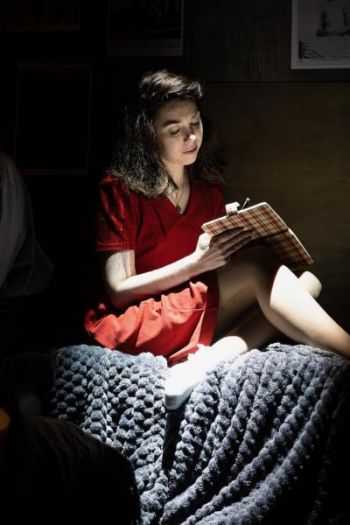
One of the production’s most poignant design elements arrives when Anne starts writing in her diary - her pages illuminated by a solitary, piercing beam of light. The stark lighting seems to symbolise the fragile hope that lived within her writing — a brightness cutting through the darkness of the world surrounding her. The accompanying voiceover is equally powerful, allowing the audience to hear Anne’s thoughts as they are formed, drawing us intimately into the inner life captured within her diary.
Another effective element includes two towering banners associated with Nazi Germany, their swastikas suspended above the secret annex like watchful, ominous eyes. Looming over the characters, they create a constant sense of surveillance and dread, symbolising the ever-present threat faced by Anne and her companions — as if danger itself were silently hunting them within their hidden refuge.
A nice intimate touch are the photographs of historical figures of the time, such as Norma Shearer, Ray Milland, Sonja Henie, Wilhelmina of the Netherlands, and a childhood portrait of Elizabeth II, all adorning the wall of Anne’s bedroom. Like young people across generations, Anne’s heroes and inspirations surround her, transforming the bedroom into a quiet reflection of dreams, admiration, and the universal longing to belong.
The lighting design by Jason Bovaird and audio design by Jordan Gibbs heighten the authenticity and emotional drama of the production. The lighting shifts with the mood of each scene — at times warm and hopeful, at others shadowed and foreboding — gently guiding the audience’s attention to the characters who carry the story’s emotional weight. The soundscape is equally compelling. The 1940’s hit Ac-Cent-Tchu-Ate the Positive (performed by Bing Crosby and The Andrews Sisters) opens Act One helping to capture the spirit of the era. The uplifting tone also reflects the hope that Anne expresses in her diary, offering a musical reminder of her belief that “in spite of everything I still believe that people are good at heart”.
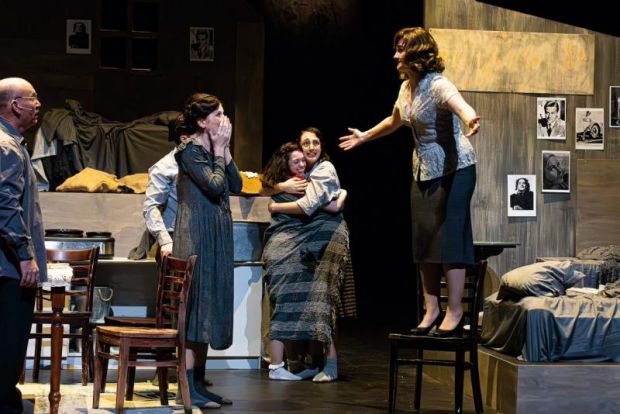
During the performance offstage sound effects help set the time and place of the story and build tension. Distant voices of drunken people walking past singing Lili Marlene, the sound of doors banging, telephones ringing, and raised voices below the annex all add to the feeling that danger is very close. These sounds make the audience feel the fear and suspense experienced by Anne and the others hiding inside. Together, the lighting and audio designs weave atmosphere and tension into the fabric of the performance.
Multi-award-winning Chloe-Jean Vincent (Richard III, A Midsummer Night’s Dream, Fading Numbers) is a revelation as Anne Frank. She brings to life the Anne many readers imagine while reading The Diary of a Young Girl, moving seamlessly between the restless, lively energy of a talkative 13-year-old and the quieter, more reflective nature of a 15-year-old growing into adulthood. Vincent’s performance is captivating and emotionally rich, balancing humour, curiosity, and vulnerability with remarkable skill. Her stage presence feels completely natural, drawing the audience into Anne’s world and making every moment feel genuine, heartfelt, and impossible to look away from.
Phil Bedworth (Macbeth, Of Mice and Men, Mamma Mia!) and Holly Easterbrook (Twelfth Night, Aladdin, Spamalot) are perfectly cast as Otto and Edith Frank, delivering performances that complement one another with remarkable emotional depth. Bedworth brings a quiet authority and composed strength to Otto (affectionately called ‘Pim’ by Anne), embodying a stabilising presence within the family and restoring calm to tense moments with his measured, thoughtful portrayal. Easterbrook, in contrast, captures both tenderness and resilience as Edith. She presents the warmth and nurturing spirit of a devoted mother, while also revealing a woman capable of fierce determination when protecting her family. Together, their performances create a deeply human and believable portrait of parental love under extraordinary pressure.

Matt Dyktynski (Love and Other Catastrophes, Offspring, The Secret Life of Us) and Asha Cornelia Cluer (Reckless, The Nutcracker, Saturday Night Fever) are brilliant as Putti and Petronella Van Daan. Dyktynski captures Putti’s nervous, self-focused personality while still showing his vulnerability, making the character feel real rather than unlikeable. Cluer shines as Petronella, confidently portraying her pride, sharp humour, and determination to maintain dignity despite their difficult situation. Together they create an engaging and believable couple, with a chemistry that moves naturally between affection, frustration, and humour, bringing energy and authenticity to their scenes.
Nathan Hampson (Fading Numbers, Mr & Mrs Revolting, Once Upon a Grime) shines as Peter Van Daan, the shy, reserved teenage son of the Van Daan family. Hampson captures Peter’s quiet awkwardness and gradual growth, revealing his kindness and thoughtful nature beneath the initial shyness. His performance is particularly moving alongside Anne, as their friendship gently develops into a tender teenage connection. The natural chemistry between them brings authenticity, warmth, and sweetness to their interactions, creating some of the play’s most heartfelt and hopeful moments amid the tension of life in the annex.
Emma Smith (The Tempest, Alice in Wonderland, Flowers in Antarctica) is captivating as Margot Frank, Anne’s older sister. Margot is quiet, thoughtful, and composed, often acting as a calming presence in the tense environment of the annex. Smith brings depth and subtlety to the role, showing Margot’s intelligence, empathy, and inner strength, as well as her fears and frustrations. Her interactions with Anne and the Van Daan’s highlight Margot’s gentle influence and quiet resilience. Smith’s performance makes Margot fully realized, providing a layered, heartfelt presence that complements Anne’s energy and enriches the story of life in hiding.
Finley Award winner Jamie Jewell (Guys & Dolls, Cats, Pippin) delivers a compelling performance as Jan Dussel, the anxious and meticulous dentist who joins the group. Jewell brings depth and nuance to the role, capturing Jan’s nervous energy, socially awkward moments, and meticulous attention to order. He also conveys the character’s quiet empathy, vulnerabilities, and humanity, making Jan relatable and sympathetic. Jewell’s skilful portrayal balances tension and humour, enhancing the dynamics of the group.
Grace Tolich (Coded Comedy, Filter Fun Park, Golden Age Girls) delivers a heartfelt and inspiring performance as Miep Gies, the courageous and compassionate helper who risks everything to support the families in hiding. Tolich captures Miep’s warmth, practicality, and unwavering loyalty, infusing the character with kindness and emotional depth that make her presence both comforting and vital.

Kingsley Judd (Where Water Once Was, Someone Who’ll Watch Over Me, The Cockatoos) brings calm strength and integrity to Mr Kraler, the devoted secretary and pillar of support for the Frank family. Judd portrays Kraler’s intelligence, moral courage, and quiet resilience with nuance, highlighting the weight of responsibility he carries while providing hope and stability. Together, Tolich and Judd embody the courage, humanity, and heart of the adults who make survival in the annex possible.
This cast is a true tour de force — a brilliant, electrifying ensemble of ten performers whose exceptional chemistry and unwavering commitment to the story allow the production to move with striking emotional force and elegant unity. Together, they create theatre that is both deeply moving and beautifully refined, holding the audience in its spell from beginning to end.
The Diary of Anne Frank is not just a play — it’s a reminder of why Anne’s legacy endures and is a powerful journey that will ignite hope within you and linger in your heart long after the final lights fade.
Jonathan Cox
Photos: Amanda Humphries
Subscribe to our E-Newsletter, buy our latest print edition or find a Performing Arts book at Book Nook.