

The Doll Trilogy: Kid Stakes, Other Times, Summer of the Seventeenth Doll
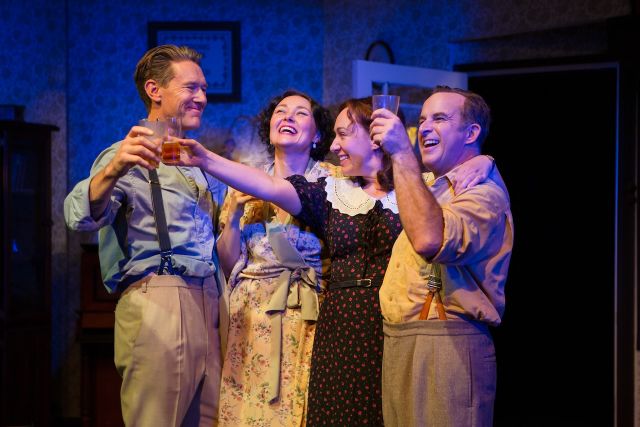
Cane cutter mates Roo (Ben Prendergast) and Barney (John Leary) come down from Queensland in the off season – or ‘layoff’. By chance, they run into a couple of girls – Olive (Ngaire Dawn Fair) and Nancy (Emily Goddard) – at the aquarium and end up as boarders and more at the Carlton boarding house run by Olive’s mother Emma (Caroline Lee). She’d never have had a bar of these blokes if she didn’t need the money. And so began the ritual – five months together in Melbourne, seven months waiting – across seventeen years, each marked by Roo giving Olive a Kewpie doll…
Red Stitch’s mounting of all three plays of The Doll Trilogy in chronological order is hugely ambitious, bold and illuminating. We are drawn back into the past to see and to feel how it all began and, with this superb cast, how things inevitably changed. It starts in the penny pincher Depression, moves to the end of WWII and the boys’ demob, and on into the fifties and the summer of the seventeenth doll.
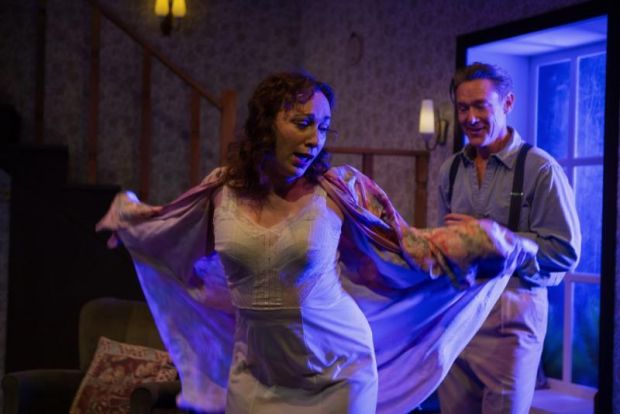
To see all three plays in one day is an extraordinary and unforgettable experience. Written twenty years after The Summer of the Seventeenth Doll (1955), Kid Stakes (1975) and Other Times (1976) allow us to witness the prequel - or the ‘backstory’ – to the famous groundbreaking play.
Red Stitch’s theatre is simply too small to allow for the elaborate and detailed set described by Ray Lawler in his text. Jacob Battista’s and Sophie Woodward’s set improvisation is necessarily simpler, but a great imaginative achievement – and we should add that their choices of the women’s wardrobe for each period are perfect. Their set gives us a dowdy, cheaply furnished boarding house living room that in itself scarcely changes across the seventeen years; there is a functioning staircase to the unseen upstairs bedrooms and French windows out to next door’s yard. But the passage of time is brilliantly suggested by Rachel Burke’s lighting – using the lighting resources and limited filters of each period, from the warm, optimistic glow of the story’s beginning through to the harsh sad light of its end.
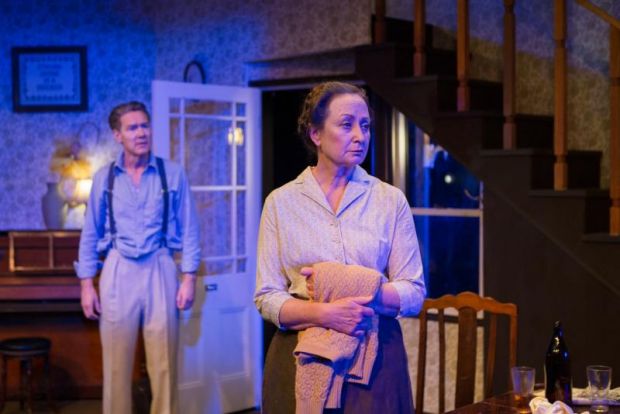
In The Doll, Lawler necessarily but intriguingly suggests the past and leaves us to pick up and infer what happened. Urged by his first director, John Sumner, Lawler fleshes out those hints and suggestions in Kid Stakes and Other Times without at all weakening the climax of the Doll itself. Rather are our perceptions of the whole story altered and deepened. If anything, these plays make The Doll itself even stronger, more disillusioning, more heartbreaking, its jokes more spikey.
What strikes us – and the more so considering the state of Australian theatre in 1955 – is not just Lawler’s naturalism in his depiction of ‘ordinary’ working class Australians but his unblinking honesty about his characters and the forces that act upon them. There is not a hint of sentimentality here. On the one hand, Lawler lets no one off the hook, but on the other he is deeply sympathetic. He shows us how fiercely people will shore up their illusions but how a tough cynic can fall for a scam; he shows us the fragility of the male ego and how ‘mateship’ can involve the most absurd loyalties. And how Nancy is a haunting unseen presence in The Doll because there are frequent and references to her.
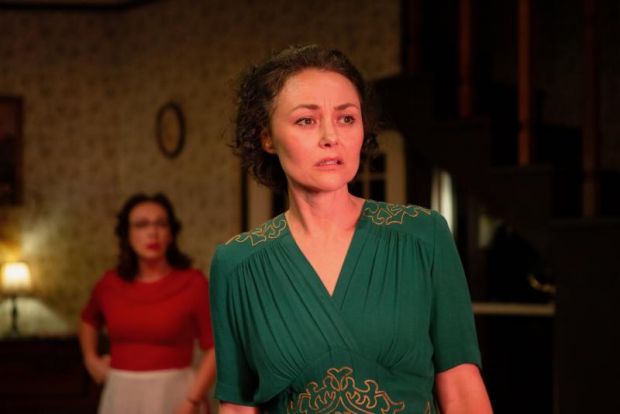
At least two powerful questions arise from The Doll: how did it all begin, and what happened to Nancy? We see the answer to the first in its fun and funny set-up. All the plays are filled with very Australian rough comedy, sarcasm, teasing and irony. But in Kid Stakes we also see – if in hindsight - the seeds of decline and fall already there. As for Nancy, we know her because Emily Goddard has brought her vividly to life in Kid Stakes and Other Times – funny, silly and sensual, and then angry and broken.
Goddard’s wonderful performance (she plays Pearl, a totally different character beautifully in The Doll) is a distinct contrasting performance to Ngaire Dawn Fair’s Olive – who is girlish, high-spirited and determinedly ‘romantic’ - and we see her age and lose her girlishness, clinging ever more desperately to her version of the past.
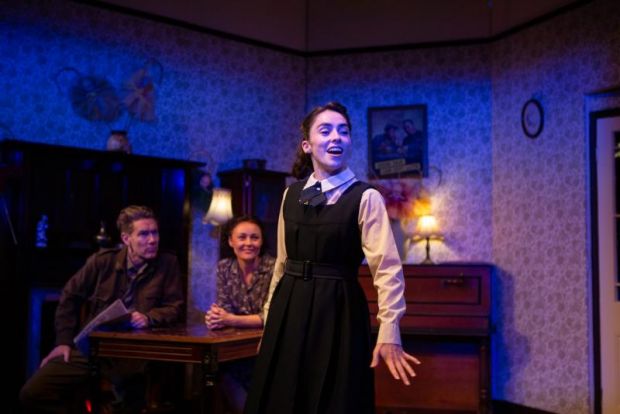
But Goddard’s and Fair ‘s are just two of the fine performances from this amazing ensemble. Not least because each of them is on stage more than seven hours across the three plays. Each brings their character to nuanced, detailed life – not as fixed entities but evolving and revealing more and more of themselves. John Leary’s Barney is a pants man and a joker, but Leary bravely makes no attempt to soften the edges. We see through Barney’s bluster and lies, and into his cowardice. Ben Prendergast’s ‘nice guy’ Roo is more ambiguous; he’s certainly not giving anything up for Olive and his persona is not what it may seem - and Prendergast subtly ages his character to a haggard, diminished man who’s lost his pride…
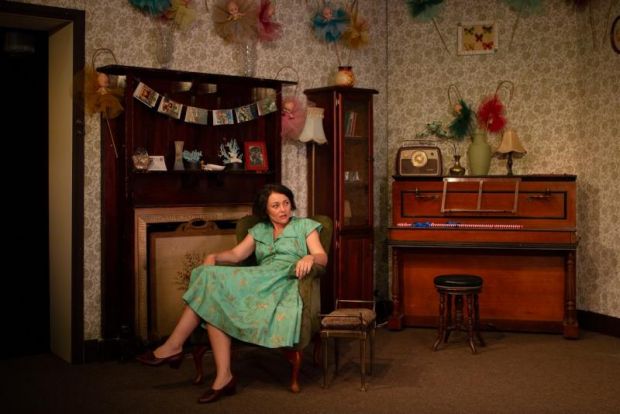
Caroline Lee’s Emma – as fine a performance as we might expect from Lee – evolves too. In the Depression times of Kid Stakes, Emma’s anxiety about money manifests itself in sharp-tongued cynicism and the lonely vulnerability and gullibility underneath. Lucinda Smith’s Bubba – just a voice from next door at the start – brings youth and a rose-coloured defiance onto the stage until she runs smack into things outside the family romance traditions of the seventeen dolls. Khisraw Jones-Shukoor is amazing as he gives us three sharply delineated different outsiders, intruders into the world of the boarding house: ‘artistic’ ambitious window dresser Dickie, who could have given Olive a different future; Josef, the bookish Jewish-German ‘reffo’ who takes a shy shine to Nancy and who provides a target for Barney’s xenophobia; and Johnnie, the young up and comer cane cutter rival for Roo, on the make and full of vanity, piss and vinegar.
The Doll Trilogy are ‘old-fashioned’ plays, each running well over two hours when, these days, so many shows are eighty-ninety minutes, no interval. Other Times may be burdened with just a little too much exposition, but all three plays sustain over their length.
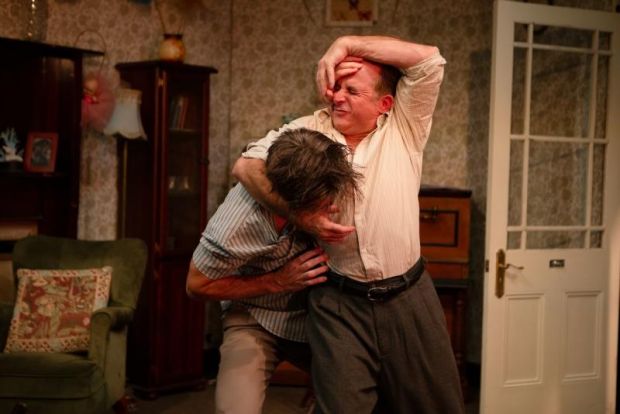
And, yes, Lawler does provide more directions and explanations than is usual in his text, but the coherence, nuance and sustained quality of this ensemble owe much to director Ella Caldwell’s guiding hand. This has to be one of her greatest achievements – and, as Red Stitch’s Artistic Director – an act of courage to put these three plays on the stage together.
Michael Brindley
P.S. The three plays are separated by intervals of more than an hour, but they can each be seen separately if the prospect of all three in one day seems daunting.
Photo credit: Chris Parker.
The top three images are of Kid Stakes, followed by two images from Other Times and two from Summer of the Seventeenth Doll.
Subscribe to our E-Newsletter, buy our latest print edition or find a Performing Arts book at Book Nook.