

Eugene Onegin
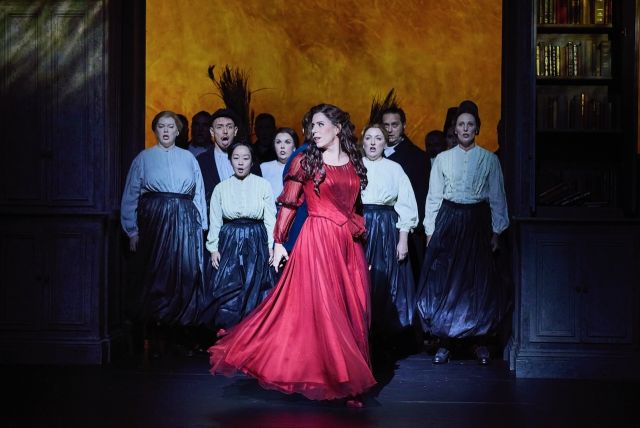
What was Timothy Chamalet talking about? Opera (and ballet) might an artform that that he doesn’t care much about – but at the opening night of Opera Australia’s latest production the enthusiasm of the audience was palpable.
A stunning looking production, lots of nice tunes, set to tale of young love, dashed hopes, and men behaving badly, made this a delicious mix. My plus one made the comment that this production rocked.
This was all topped off with an outstanding cast. There was the welcome return of an Australian opera star who spends most of her time working overseas. Sitting next to us were the beaming parents of Lauren Fagan in the lead role of Tatyana.
Lauren has built an international career at leading opera houses and is based in Vienna. Her performance was poised and polished.
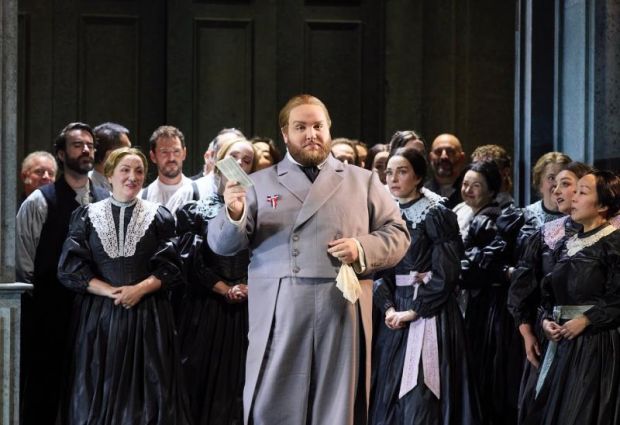
In the title role of Onegin – was striking Ukrainian baritone Andrei Bondarenko – carving up the Russian language arias.
The biggest ovation of the night went to Australian tenor Nicholas Jones in the melancholy aria Kuda Kuda, vi udalilis.
Whilst those with the top notes usually star in opera – Tchaikovsky’s opera has a stunning song for a Bass baritone. Prince Gremin’s aria luxuriates deep rich tones which touch the bottom of what feels like is possible for a male singer.
Opera Australia company member David Parkin reverberated like a good barrel of red wine.
A feature of Tchaikovsky’s orchestration is that he often uses instruments at the opposite end of the range of the soloists, which accentuates their qualities rather than compete with it.
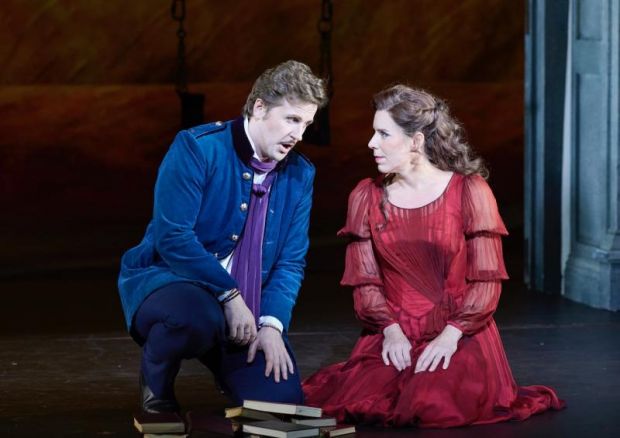
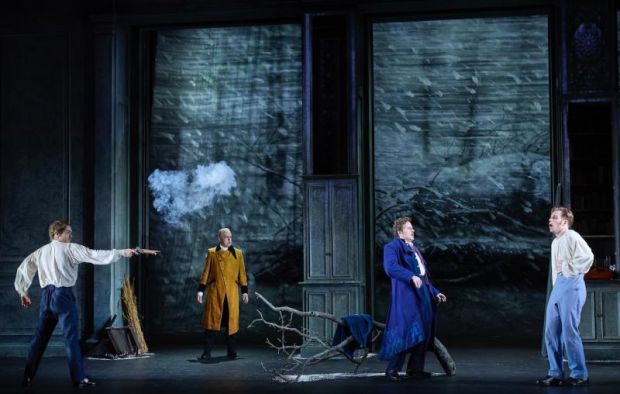
The story is easy to follow. Young Tatyana falls in love with the dashing Onegin. Not ready to settle down he flirts with another lady Olga – enraging her suitor, Lensky. They dual and years later Onegin returns hoping to patch things up.
It is not all dark – there are dashes of humour in the translations and a delightful comedic aria by Monsieur Triquet (Elias Wilson).
This production was originally created for the Royal Opera House at Covent Garden. Director Kasper Holton doubles the two leads with young dancers at pivotal moments - making the opera a representation of them looking back at their lives.
The production is framed by a classic looking house with tall doors. Projections and simple set pieces mark the changes from grand homes to a forest.
Scene one has a breathtaking entrance of the chorus – celebrating the harvest.
We drink in the fine singing, crisp orchestra – and when they freeze it resembles a grand master painting.
David Spicer
Photographer: Keith Saunders
Subscribe to our E-Newsletter, buy our latest print edition or find a Performing Arts book at Book Nook.