

I Thought You Said
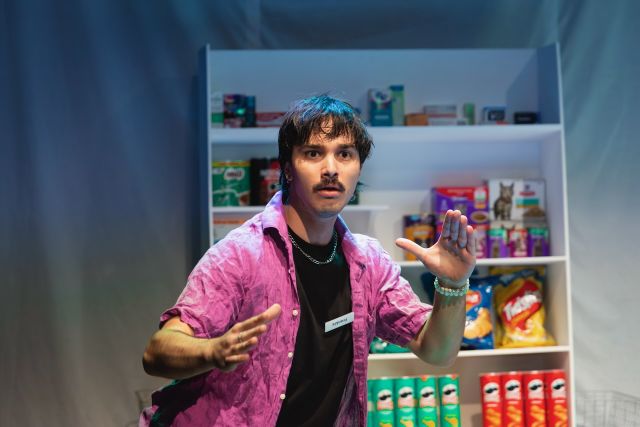
This provocative and intelligent two-hander makes us laugh – and also squirm at its veracity. The blurb asks, if the world is ending, ‘…what kind of person do you want to be at the end of the world?’ In essence, I Thought You Said is about the rage and frustration caused by a terrible contemporary paradox. While it may seem utterly futile to protest about the injustice and corruption and cruelty in the world, one still feels one must (should?) protest to be ‘a good person’.
In the Theatre Works website interview, playwright Bronte Lemaire tells how she found the substance of her play – and her crackling dialogue - by listening to and observing her colleagues, friends and random people – their opinions, ideals, attitudes, evasions, rationalisations, and confusions. Lemaire has a very good ear.
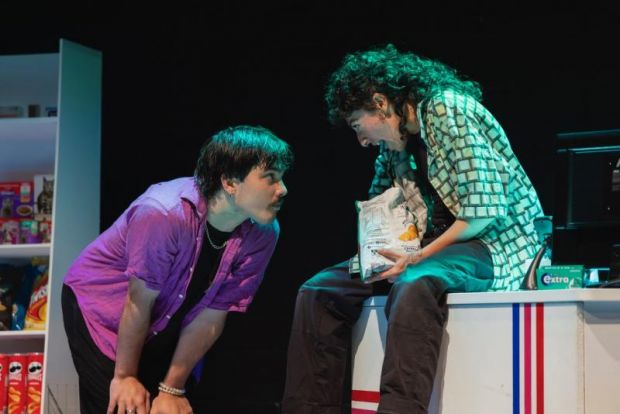
In the very basic shop at a remote service station, the night shift staff – old schoolmates Sam (Ally Taueki-Gatt) and Frankie (Finn Corr) – are not expecting many, if any customers – not even for petrol. Just gonna be a normal night - stock the shelves, eat some of the merchandise, bicker, and play around – even if the exploited stars are falling out of the sky. In fact, there’s a small star dying just outside, on the service station forecourt. But what are Sam and Frankie supposed to do about that?
Sam seems quiet, reasonable, rational – if bitter - the grown-up if you like. Taueki-Gatt plays Sam in a way that appears so natural and so engaging that it doesn’t seem like ‘acting’ at all. By contrast, Finn Corr’s Frankie bursts onto the stage talking very fast and very loud – sometimes as if to himself – manic, like he’s on something or hyper nervous – maybe both. These contrasting acting styles shouldn’t work together but somehow, they do and, anyway, Sam accepts this as normal. Very soon they are engaged in a kind of ethical debate about doing the right thing and by extension about being a good person. The by-play back and forth is smart and funny and entertaining. Sam is cynical – but we realise that cynicism is her defence against inaction – and despair. Virtue signaller Frankie comes up with contradiction after contradiction – but we realise that really, he’s searching for answers and not just being a smart-arse.
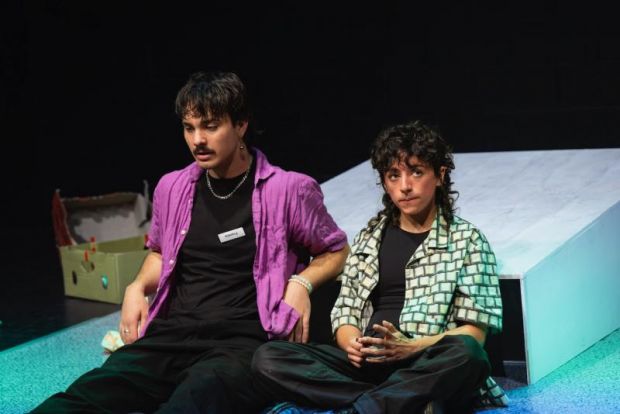
These impressions are reinforced in monologues when – after a lighting change - each of them comes downstage and addresses the audience quietly and directly, with touching vulnerability, revealing the feelings and defences under the one-upmanship debate where they each try to catch the other out. ‘Ah-ha – I thought you said…’
What anyone is ‘supposed to do’ is the point, the crux of it. Sam and Frankie are in awe of someone called Alex. He protested, he was out there; every march, every demo, he put himself on the line. But where did that get him? Did he change anything? Talking about Alex puts Sam and Frankie into a sombre mood. It stops them as if they hit the wall of heroic example that was – is – maybe pointless.
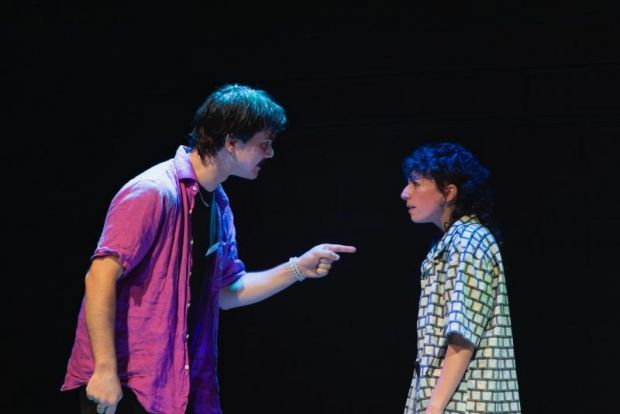
Not everything in I Thought You Said works – that is, is integrated in the whole. There are blackouts followed by montage-mashups on a huge screen of everything terrifying, overwhelming or just irresistible clogging trivia – and during these projections the actors perform jerky, panicky dance moves. We see the intention, but does it work? It seems too radical a change of style. Simarlarly, as the play proceeds and the characters sink deeper into depression, they act out by destroying their workplace - Aisha Tabit’s and Julian Machin’s set. Again, the intention is clear, but it feels awkward and excessive. Or is it just the best that they can do?
The metaphor of the falling stars doesn’t quite mesh either – it feels to me too neat a tack-on - even if Sam and Frankie kneeling over the star as if slowly dies is curiously touching.
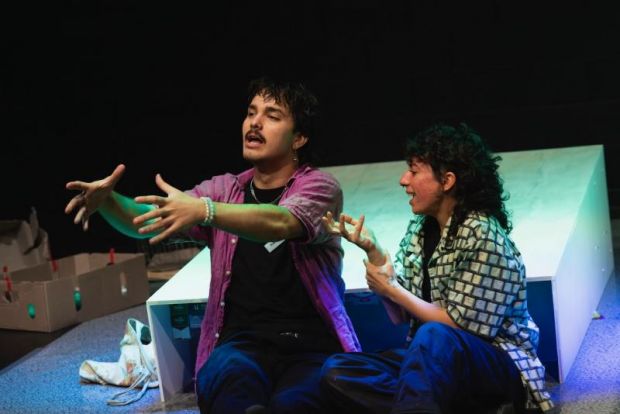
But overall, these are small flaws overcome by the excellence of the performances and the quality of the machine gun delivery of the ultra-smart dialogue. At 80 minutes it might go on five or ten minutes too long, but the resolution is sweet and earned. This is only Bronte Lemaire’s second play. I predict interesting and challenging future work from her, and I look forward to it.
Michael Brindley
Photographer: Mia Sugiyanto
Subscribe to our E-Newsletter, buy our latest print edition or find a Performing Arts book at Book Nook.