

Little Shop of Horrors
It’s timely to welcome back Little Shop of Horrors, a cult classic whose black comedy and symbolic bite feel increasingly resonant in an era of social unease. Beneath the doo-wop harmonies and carnivorous plant puppetry lies a story steeped in moral compromise, unchecked ambition, and the seductive pull of power, ideas that land sharply in a world questioning capitalism, geopolitics, social structure and the like with renewed urgency.
Director Alister Smith approaches the material with the above-mentioned insight, balancing the show’s inherent camp with moments of operatic drama and genuine tension. The result is a production that honours the buoyant 1950s–60s aesthetic while allowing Alan Menken’s era-defining score brimming with early rock and Motown vitality to pulse with darker undertones.
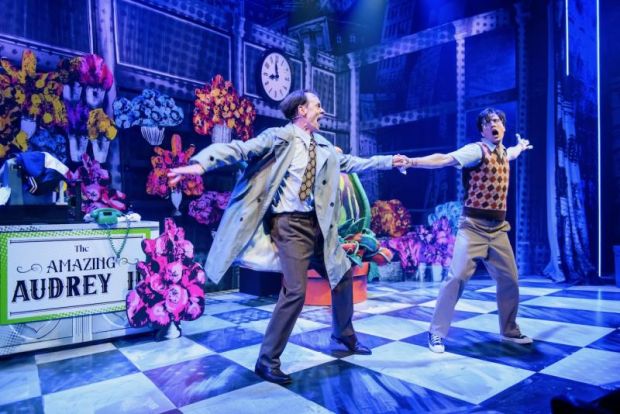
Famously, Little Shop grew from humble off-off Broadway roots, inspired by Roger Corman’s low-budget B-movie sensibilities. That intimacy still serves the piece well, particularly in smaller theatre settings where the audience sits close enough to feel personally threatened by a flesh-eating hybrid of a possible Venus flytrap and avocado combined. Audrey II remains a marvellously ambiguous symbol, political, psychological, personal, or all three, slowly unmasking humanity’s darker instincts while cheerfully asking to be fed.
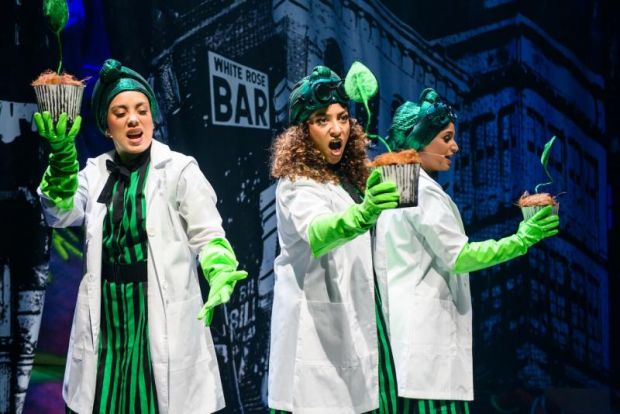
The show bursts to life with the title number Little Shop, led by a bouncy, quasi-Greek chorus trio: Kimberley Hodgson (Crystal), Anna Francesca Armenia (Ronette), and Nykita O’Keeffe (Chiffon). These roles demand precision - tight three-part harmonies paired with relentless choreography and where choreographer Dan Venz rises splendidly to the challenge. No doubt with patience and perseverance from Musical Director Heidi Loveland, music first and then choreography soon aligned seamlessly, and the trio anchor the show with vocal polish, energy, and infectious spirit.
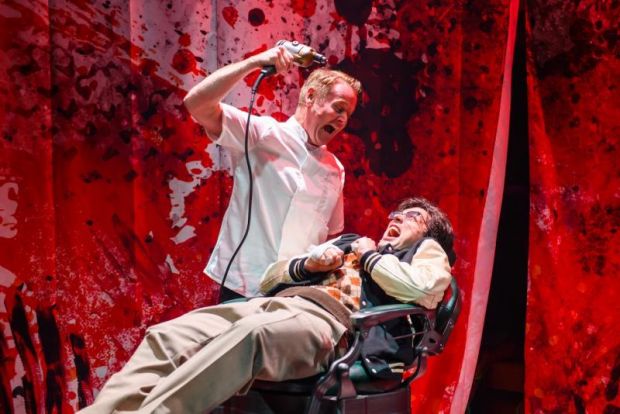
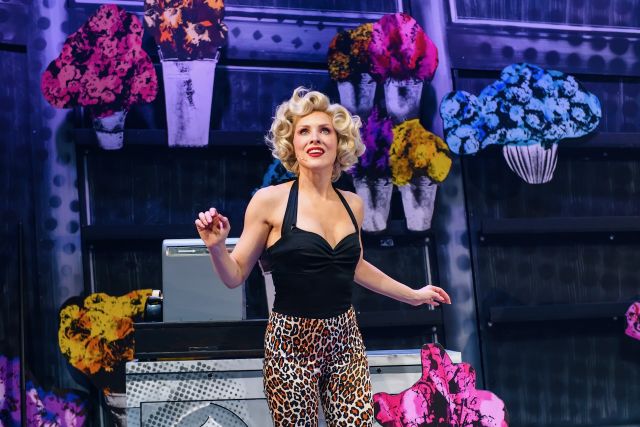
The action settles into the flower shop, imaginatively designed by Penny Challen in a palette of grey offset by striking red curtains. In fact the general design throughout is an impressive symbolic visual choice that quietly underscores the show’s moral decay. Seymour (Maxwell Simon), in an impressively sustained and charismatic performance with such an exhausting role, works alongside the sweetly delusional Audrey (Kirby Burgess) under the watchful eye of Bryan Probets’ gloriously cantankerous Mr Mushnik. QTC veteran Probets delivers with seasoned gusto, while Burgess shines with a convincing, seemingly intentional Marilyn-Monroe-esque vulnerability. Her rendition of Somewhere That’s Green is particularly moving, and Suddenly Seymour remains an undeniable highlight, a favourite song of mine in the show.
Having a more 'Off-Broadway' quality, and often for budget reasons, the show also calls for an actor to play multi-roles throughout, in particular Audrey's initial boyfriend, sadistic dentist Orin Scrivello. Stephen Hirst's magnetic and unhinged performances had the audience in stitches with some hilarious comedic interpretations throughout, demonstrating that black comedy can work just as well given the right medium. The scene set in the dentistry is worth a mention here being a terrific scene to horrifyingly close act 1 - well almost, without giving too much away ....

And then there’s the star attraction. Audrey II, well puppeteered by Charles Ball and voiced with delicious menace by Mathew McKenzie, is both technically impressive and genuinely intimidating. That familiar refrain of “feed me” lingers long after the curtain falls, with the unnerving persistence of a tune you wish you hadn’t memorised.
Though the opening performance was understandably infused with extra adrenalin from some of the cast, this will no doubt settle into greater nuance and breath as the run continues. Having seen various versions in the past, too, I felt the show a little 'dated' now with certain low-points in its musical and dramatic construction. Nevertheless, one can see why it has remained a crowd favourite having such an outrageous theme, gallery of eccentric characters and boppy, rhythmic musical score - and a delicious ending to the plot.
The evening concluded with rapturous applause from an enthusiastic audience, some of whom could be heard humming along on their way out, a sure sign of musical theatre doing what it does best. This inventive, entertaining professional production is well worth a visit for newcomers and long-time fans alike. It’s surely the rare musical where a possible apocalypse sings in harmony, dances on the beat, and politely asks to be fed!
Brian Adamson
Photographer: Joel Deveraux
Subscribe to our E-Newsletter, buy our latest print edition or find a Performing Arts book at Book Nook.