

The Murder of Roger Ackroyd
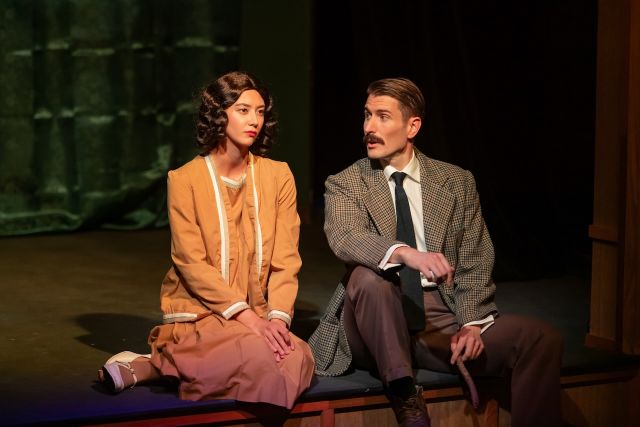
Murder mysteries continue to be the mainstay of many theatre companies. And why not? Audiences love them so they boost the budget. Designers love them because they are often set in different periods so the set and costumes can be a little extravagant, there are usually interesting sound and lighting effects. Actors love them because they usually have a big cast and quirky character … and if they were written by someone like Agatha Christie there lots of twists and turns and even a little bit of comedy.
Directors love them for all the points above, so what better choice than an Agatha Christie to begin the Genesian Theatre’s 2026 season, especially in the hands of a director who is as meticulous and discerning as Ali Bendall.
Bendal has brought a breath of fresh, creative air to the Sydney theatre scene over the past few years, and in this production, she skilfully demonstrates how to face the biggest challenge of a Christie play – keeping “the mystery alive while allowing the story to move at pace”.
The Murder of Roger Ackroyd has multiple scenes, set in various locations in two houses in the village of King’s Abbot in England in the 1920s – so it’s important to establish the period, the settings, the crime, the characters … eleven of them … and their bona fides.
Bendall attacks this with imagination, initiative and verisimilitude. She confirms the period and the settings quickly through costumes, the action, and minimal props. She moves things along by taking some of the shorter scenes into the auditorium itself, and the judicious use of back curtains and lighting effects. Bendall keeps the action brisk while still ensuring the essence and aura of the time – established and sustained by her astute direction and her accomplished creatives, lighting designer Cian Byrnes and costume designer Susan Carveth.
Bendall’s eye for period detail extends to the costumes as well as the stance, movement, voices and gestures of the cast. Carveth has been the designer/costumier for many Genesian productions. She excels particularly in period pieces and this is no exception. The costumes are immaculate in design and detail. The colours give balance and contrast on the stage – and under Bendall’s direction the actors wear them elegantly, depicting Christie’s characters clearly in the precise poise and ‘parlance” of the time.
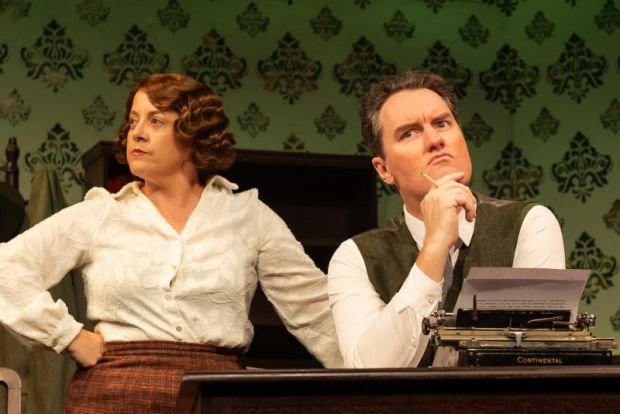
Nathan Moss is the suave village medico, Dr Sheppard, entranced with his new dictaphone (sourced from America) and looked after by his nosey sister Caroline played with impish impertinence by Roslyn Hicks. This pair set the mood for the production. With quick, clear, clipped dialogue, excellent timing and brief comedic pauses, they introduce the scenario – and their new next-door neighbour, M. Hercule Poirot – who is called in to help with the investigation of murder of wealthy Roger Ackroyd of the local manor, Fernly Park.
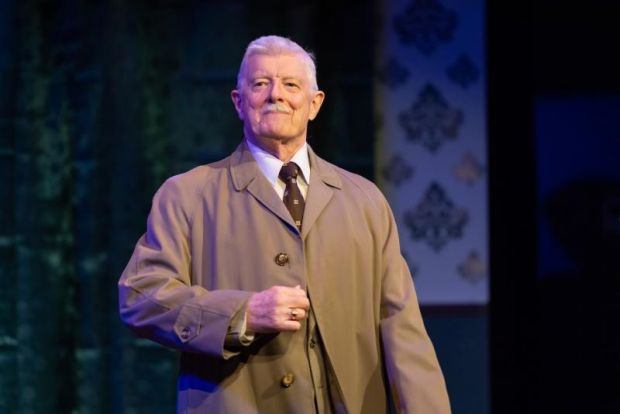
There have been numerous Poirot, so it’s not easy to make the character your own, but Peter David Allison does it with true aplomb, carrying the historical weight of the character with suitable grace, distance and fitting Poirovian style – even when he appears at first in a garden hat and coveralls carrying a basket of vegetables!
David Stewart-Hunter plays Inspector Raglan of the local constabulary, comfortably finding the comic satire Christie gave to all of Poirot’s adversaries whilst still maintaining the pride and the authority of his position.
The “suspects” at Fernly Park include, of course, the Butler, John Parker, played with appropriate stiff reserve by Peter Hoekstra-Bass. Tall and stately, Hoekstra-Bass plays that the incongruity of that aloofness cleverly, especially when Poirot asks him to mime carrying a tray!
Jen Manoogian is Ackroyd’s niece, Flora, secretly engaged to Ralph Paton, Ackroyd’s stepson. Manoogian gives the role the wide-eyed naivety of the character – and wears the 1920s costumes with sophisticated style.
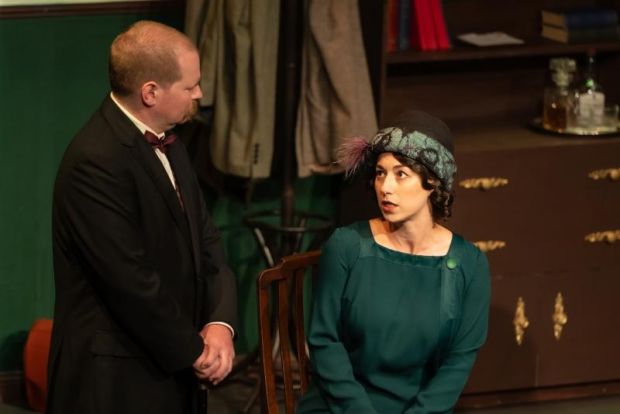
So too does Julie Mathers, playing her mother, Mrs Ackroyd. Mathers brings experience across a range of genres to the production and clearly establishes the assumed haughtiness and social bearing of this character.
Harry Charlesworth is Geoffrey Raymond Ackroyd’s business secretary. Charlesworth finds both the arrogance and superciliousness of this character … who knows details of his late employer’s will … until he too comes under suspicion, along with “big game hunter” Major Blunt, played with stiff, military detachment – and some elegance – by Simon Pearce.
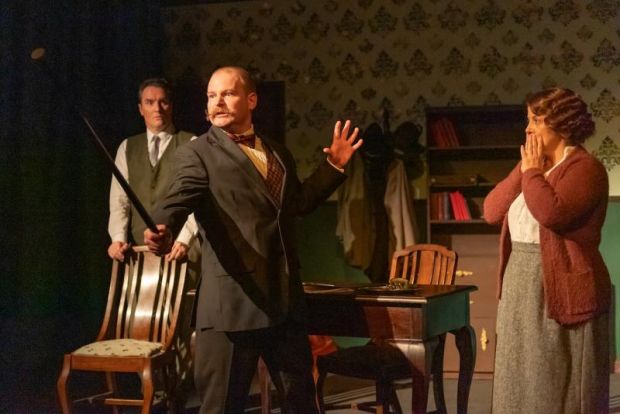
Oscar Baird plays Charles Kent an American who visited Fernly Park on the late evening of the murder and comes under suspicion – and is arrested after a chase through the audience. Baird later appears as the much more stylish stepson, Ralph Paton.
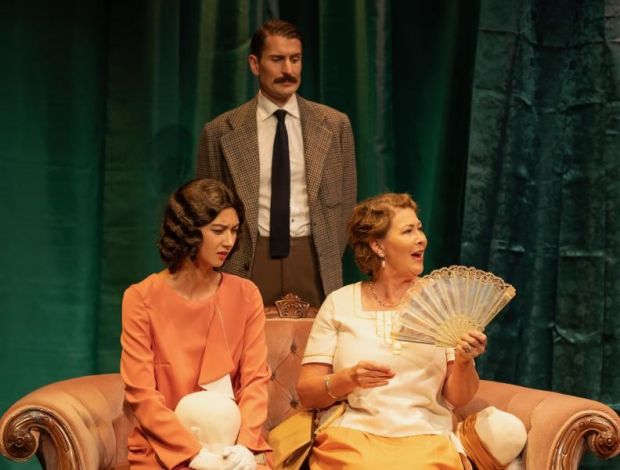
Jane Thorpe plays the housekeeper, Natalie Huges is the maid and veteran Genesian stalwart Rod Stewart appears in a cameo moment as a “special agent”. All l three add to the colour and intrigue of Ali Bendall’s genre-strong, contemporary-paced production of this Christe classic which features blackmail, a dagger, a locked door, an open window, muddy footprints … and an antique Dictaphone!
Carol Wimmer
Subscribe to our E-Newsletter, buy our latest print edition or find a Performing Arts book at Book Nook.