

Nell Gwynn
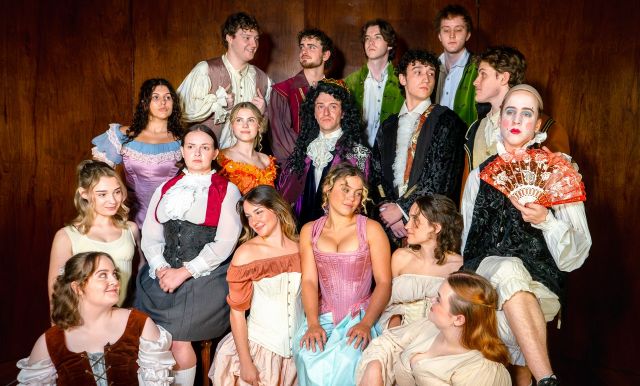
Jessica Swale’s Nell Gwynn plays at Metro Arts, delivering wit, music and bawdy restoration theatre-style mischief, brought to life by the Queensland Conservatorium Griffith University’s third year Bachelor of Acting students. This reviewer saw the Cheapside Cast, and what an evening they delivered: spirited, polished and brimming with the kind of ensemble unity that only comes from rigorous training and wholehearted buy-in. Their commitment and enthusiasm were palpable from the first cheeky exchange to the final curtain.
Swale’s play charts the meteoric rise of Nell Gwynn, the 17th-century orange seller who became one of England’s first professional actresses and the beloved mistress of King Charles II. After years of puritan rule that shuttered theatres, the restored monarchy reopened playhouses and, for the first time, permitted women to tread the boards. The real Nell Gwynn (1650–1687) was famed not only for her charm and comic flair but also for her quick wit and ability to win over a sometimes hostile public. Swale’s script leans into that theatricality, offering a buoyant, self-aware love letter to the stage while quietly exploring questions of agency, ambition and survival in a male-dominated world.
The Cheapside Cast embraced that spirit wholeheartedly. The pre-show improvisation set the tone beautifully, with the performers bantering confidently and inviting the audience into their world before the formal action began. It was playful without feeling indulgent, and it revealed a cast comfortable in their skins and responsive to the room.
As Nell Gwynn, Ellie Dawson was a bright, charismatic force. A definite triple threat, she combined a lovely singing voice with lively, assured dancing and genuine emotional warmth. There is something innately watchable about her; she radiates joy in performance, making Nell’s journey from streetwise outsider to theatrical star feel both earned and irresistible.
Olivia van Gool’s Rose Gwynn was focused and believable, grounding the familial dynamic with sincerity. Jett Sansom’s Ned Spiggett proved a gifted comedic performer, capable of cracking the audience up with the slightest shift in facial expression. Jamie Watson brought a thoughtful sensitivity to Charles Hart. His performance hinted at rich emotional undercurrents; with a touch more looseness and risk-taking, it could deepen further still.
Michael Hawkins’ Thomas Killigrew was believable and focused, with good timing and a quiet charisma that anchored several scenes. Jack Miller’s John Dryden generated considerable comedy by playing the role with complete earnestness, allowing the humour to arise naturally from circumstance rather than push. Oliver Hunter’s Edward Kynaston was something of a scene stealer, gifted at comedy and sharp characterisation.
Bonny Treloar’s Nancy was hilarious and wonderfully expressive, with brilliant comic timing. Ben Jason-Easton’s King Charles II offered welcome humanity and sensitivity, avoiding caricature in favour of a layered portrayal. Georgia Cassidy’s Lord Arlington was disciplined and clearly defined, with a particularly nice physical characterisation. Christina Morgan captured Lady Castlemaine’s sass with relish and took some enjoyable risks. As Old Ma Gwynn, Morgan showed oodles of commitment, though diction occasionally slipped to the point of being difficult to decipher; the boldness of the character choice may simply have tipped a little too far.
The ensemble contributed enormously to the production’s vitality. Cameron Ryan’s improvisational ease was a highlight, Kennedy Foley shone as a singer and dancer of notable strength, and Naire McDonald’s charisma and stage presence lit up every appearance. Across the board, the cast demonstrated impressive energy, teamwork and precision. The choreography was executed cleanly, the harmonies were strong, and the storytelling remained clear even amid the most exuberant moments.
Director Jacqui Somerville has clearly fostered a rehearsal room built on trust and high standards. One does not achieve this level of unified enthusiasm without strong, supportive leadership. The cast’s willingness to work beyond the confines of the stage and into the audience and stairways created a lively, immersive atmosphere, reinforcing the sense of restoration playhouses as communal spaces of spectacle and exchange.
The creative elements supported the performances beautifully. Having the musicians visible and in costume was a delight; it enriched the theatricality and underscored the celebratory nature of the piece. The music and singing were outstanding, with melodies that lingered long after the final bow. Lighting design perfectly matched the shifting moods, from courtly intrigue to bawdy backstage bustle. The set design evoked the period without clutter, allowing flexibility and fluid movement that kept the pace buoyant.
There is very little to find fault with in this production. For history buffs, it offers a delicious window into Restoration theatre, seasoned with contemporary wit and youthful exuberance. For lovers of live performance, it is a reminder of why we gather in darkened rooms to watch stories unfold. We left the theatre with tunes merrily replaying in our heads and a renewed affection for a woman who dared to step onto a stage built for men and claim it as her own.
Kitty Goodall
Photography by Hermione Devlin
Subscribe to our E-Newsletter, buy our latest print edition or find a Performing Arts book at Book Nook.