

The Trouble with Harry
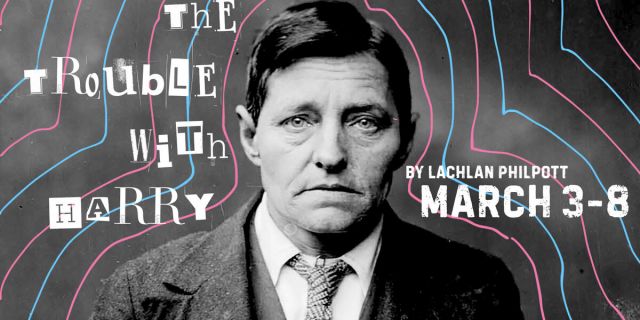
With more than 50 years as a leader in offering professional training for actors, directors and playwrights, the Flinders Drama Centre production of The Trouble with Harry is the perfect vehicle to showcase graduates of their intensive industry-ready program. With alumni including actors Amber McMahon and Noni Hazlehurst, and internationally acclaimed director Scott Hicks, the centre has an impressive reputation for preparing skilled and versatile theatre company members, and this show is yet another example.
The Trouble with Harry has been seen elsewhere, but for SA, this is a premiere. Playwright, Lachlan Philpott has cleverly taken a sensational 1920’s true story, using it to weave a complex and intriguing tale of mysterious gender identity, beleaguered family relationships, murder and complex working-class mores. Whilst gender roles are increasingly fluid and diverse today, a hundred years ago there were indisputable rules about right and wrong and violating them brought severe social disapproval, ostracizing and punishment, and it is these rules and expectations that determine ‘Harry Crawford’s’ life and destiny. It also makes, breaks and imperils a whole family.
Harry Crawford, passionately drawn by Karma Duffield is based on the case of Eugenia Falleni, an Italian migrant worker who lived as a man, before being convicted of his wife Annie’s murder. I am choosing not to divulge any of the back-story. Much is being made about the significance of Duffield being transgender. My lens is about skill as an actor. Duffield is very believable as a besotted husband and caring father, sharing vulnerability and the strong sense of being the responsible provider. Were I a jury member, I would not have believed that a love so strong resulted in murder.
Siena Itropico'’s work as Annie Birkett, Crawford’s wife, is a study in innocence, warmth and compassion. Despite other costumes being indicative of the 20’s era, she works in an outfit commonly worn by the working class in the mid 1800’s; its incongruity stands out. She, fortunately stands out for all of the right reasons.
It is a very well-balanced cast in terms of contribution and performance. For all, the directing by Kiara Skene shows impressive attention to detail, brilliant use of place, entries and space and the gift of permission for each the individual actors to stretch their acting wings, and fly.
As young Harry, Annie’s son, Georgia Watts convincingly tackles the gender change of becoming a young boy and delivers many touching and moving moments of joy and deep distress when his father’s life looks to be in peril.
Wirra Benveniste has the difficult role of Crawford’s daughter who had been secreted away elsewhere. She is angry, bitter and hell-bent on making misery. Her portrayal of a lost, somewhat unlovable cause is relieved in her interactions with young Harry where we see a glimmer of what might have been.
As Woman and Man, Aidan Puckridge and Violet Alfred have the challenging task of narrator, conscience and a myriad of important characters that flesh out the twists, turns and pressure points in this story. They prowl, they strut, they simper, and both are key players in this tale.
At 80-90 minutes, the play is a little long on ‘economy style’ seats, but the dialogue is so rich and important, that shortening this story seems unimaginable. There is little that did not capture me. I even smiled at the awkward, probably inexperienced portrayal of the smoking by men and women of the era, but this interferes little with the characterisation. Was Annie part of the deception? Was Harry/ Eugenia a victim of the time in which they lived? Only the audience can decide. The season is limited and the opportunity to see this finely honed acting should not be missed.
Jude Hines
Subscribe to our E-Newsletter, buy our latest print edition or find a Performing Arts book at Book Nook.