

The Wolves
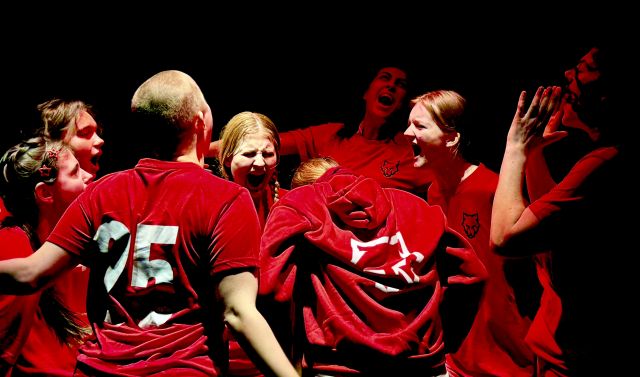
This review only covers the first of the two casts performing this play.
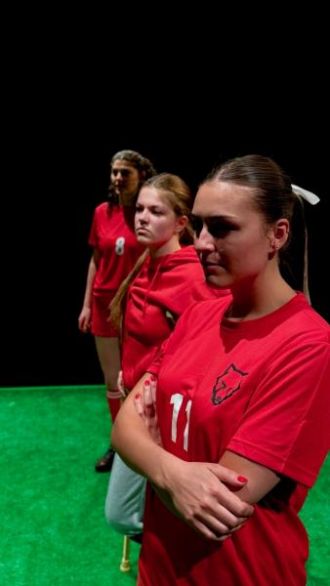 Set in an indoor astroturf field as a girls’ under-17s soccer team warm up before their weekly game, The Wolves provides a unique challenge. Not only is every character on stage of equal weight, developed to equal depth, they all need to show emotional growth through difficult experiences. The arrival of college talent scouts ramps up the tension—an unmentioned undercurrent is that being chosen for a varsity team will come with university entrance and scholarship. Concurrently the play makes physical demands of the cast. They need to be in constant, vigorous motion while delivering lines at a frenetic pace, often over each other and using both comic and tragic timing. It’s quite a challenge for a group of fledgling actors, and the girls did very well. They and director Chris Baldock should be proud.
Although only known by their sweater number, each of the girls conveys a well-drawn individual. #25 (Anneka Steel) is too good natured to be an effective captain who only has marginal charge over the more rebellious girls. #2 (Edith Baggoley) is physically immature and painfully vulnerable, while #7 (Asha Forno) is sexually active, aggressive, rebellious, prickly and ambitious. The power dynamic between #7 and her life-long friend #14 (Eliza Thomson) is immediately recognisable, with #7 being complacent and virtually abusive, leading to a dramatic public falling out. #13 (Marcelle Brosnan) is loud, funny and obnoxiousness. #8 (Catherine Elias) is wistful and childlike, #11 (Georgia Motto) is well read and embarrassed by her psychologist parents, #00 (Eleanor Graham) is high achieving but crippled with anxiety, and newcomer #46 (Io Hogan) is an awkward outsider, who deals with her social ineptitude with a pragmatic good humour.
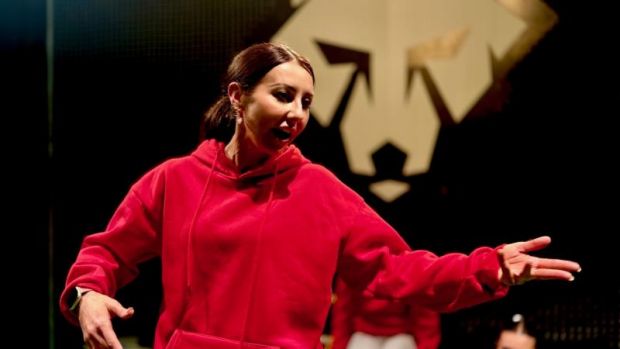
Moreover, the Wolves as a team acts a character in its own right. We see how they work together, accepting outlandish behaviours, shunning others, accepting idiosyncrasies and protecting each other. This group character arises from excellent work as an ensemble. The timing of the dialogue is without artifice and often delivered all at once, with important lines sailing over the cacophony of voices.
The final scene is tremendously sad, with the girls collectively in shock but each dealing in individual ways. Chloe Smith’s performance as a mother incoherent with grief was very real and moving.

Mockingbird Theatrics’ The Wolves captures everything, mostly good but sometimes bad, about belonging to a team in adolescence.
Cathy Bannister
Subscribe to our E-Newsletter, buy our latest print edition or find a Performing Arts book at Book Nook.